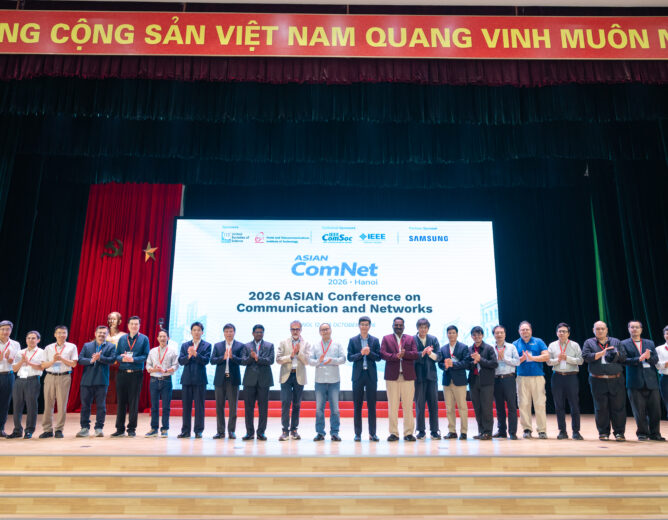
PTIT’s Information Security Honors Students Join Applied AI in Cybersecurity Course with International Expert
The course “Applied AI and Machine Learning for Network and Information Security”, together with a series of specialized talks on modern cybersecurity threats, offers students not only an opportunity to access the latest technologies but also forms part of the specialized training program designed exclusively for Honors Program students in Information Security at the Posts and Telecommunications Institute of Technology (PTIT).
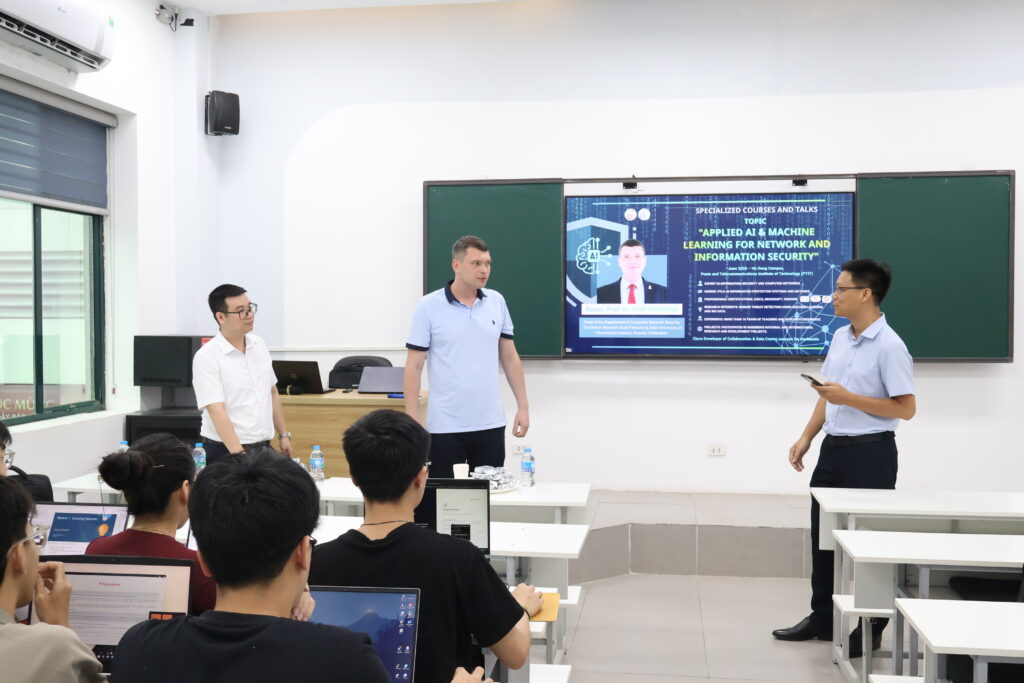
On June 29, the Faculty of Information Security at PTIT officially launched the course “Applied AI and Machine Learning for Network and Information Security” for students in the Honors Program. The course is taught directly by Assoc. Prof. Igor Ushakov, Head of the Department of Network Information Security at Saint Petersburg State University of Telecommunications (Russian Federation).
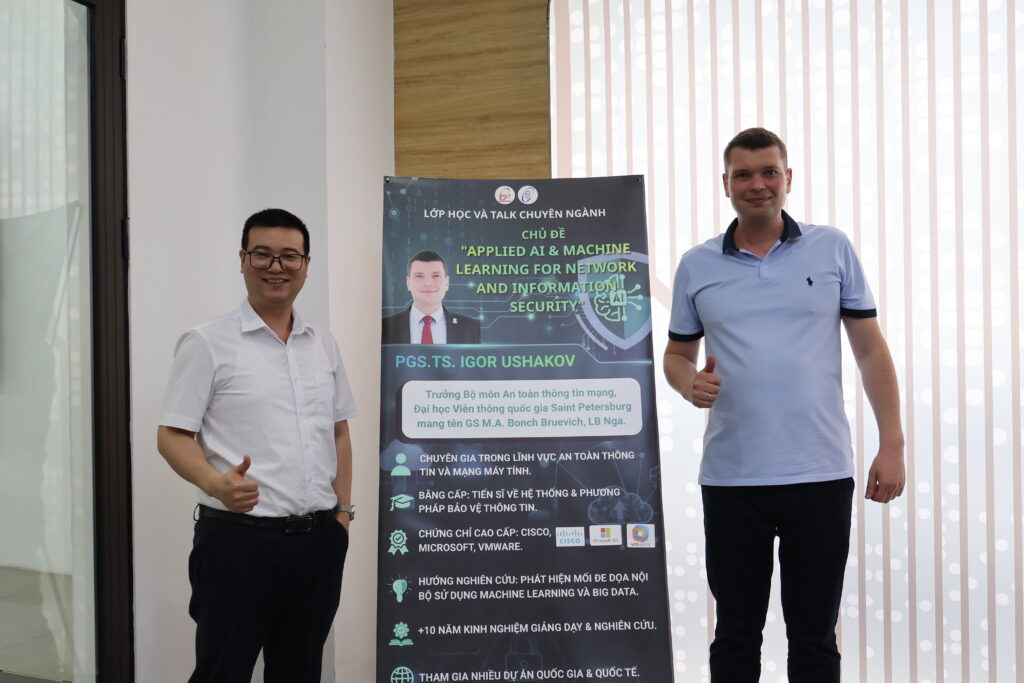
Running from June 29 to July 3, 2026, the course combines theory and practice, focusing on the applications of Artificial Intelligence (AI) and Machine Learning in networking and information security. This is one of the academic activities specifically designed to enrich the learning experience of PTIT’s Honors Program students majoring in Information Security.
A curriculum aligned with emerging technology trends
As AI continues to reshape the field of information security, the course has been designed to align closely with current technological trends and industry demands.
In the very first session, students were introduced to the fundamentals of network security, while also learning how AI and Machine Learning can be applied to detect, analyze, and respond to cybersecurity threats. They also participated in their first hands-on lab on data collection, processing, and analysis for information security applications.
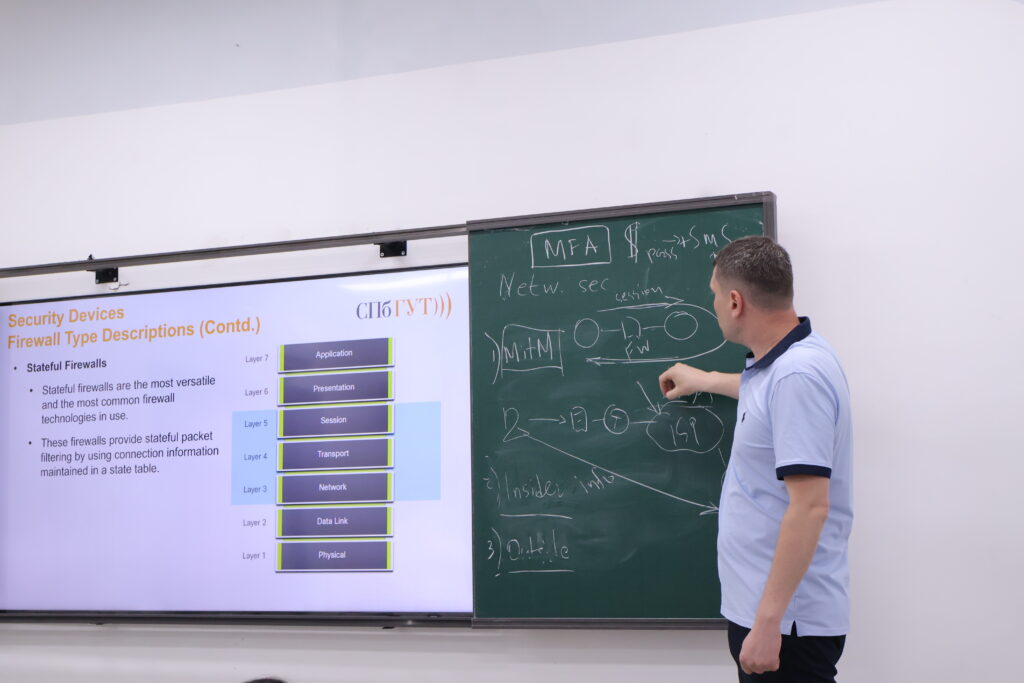
According to the schedule, the following sessions will cover more advanced topics such as network attack and defense techniques, cloud security, AI-based anomaly detection models, and the development of final projects.
In addition to the course, on July 4, a specialized talk titled “Modern Threats and Methods of Countermeasures” will take place, offering students an opportunity to engage directly with experts on major challenges in modern cybersecurity, including risks posed by quantum computing, attacks targeting AI systems, cyber fraud, and emerging defense methods.
A distinctive feature of PTIT’s Information Security Honors Program
A key highlight of this academic series is that it is organized exclusively for students of the Information Security Honors Program—a specialized training program developed by PTIT to nurture high-performing students with strong potential for research and development in strategic technology fields.
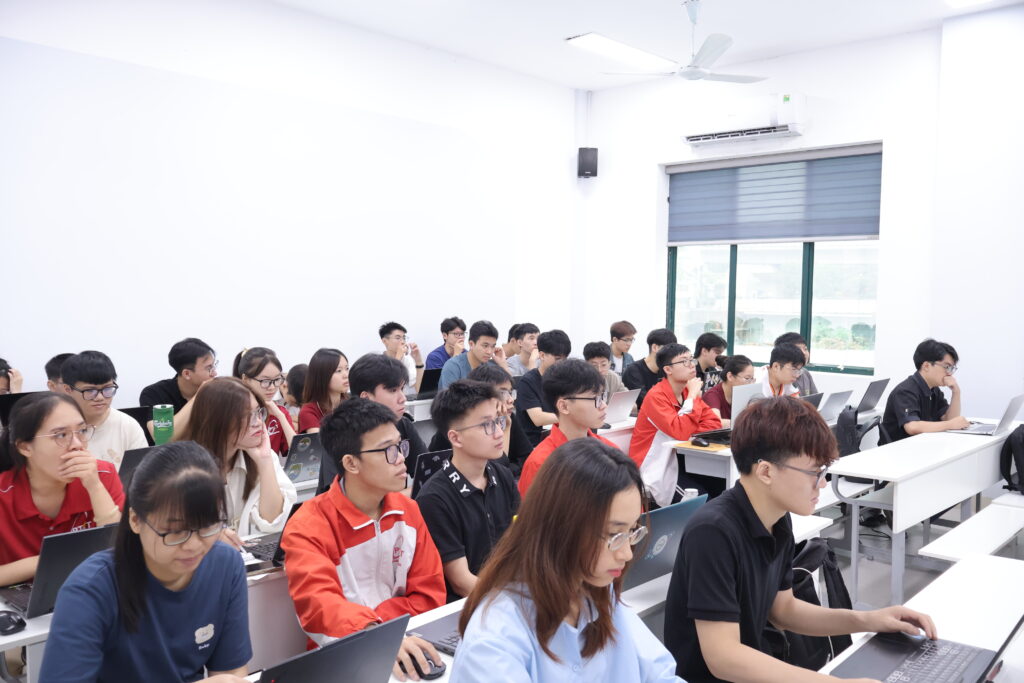
Beyond the standard curriculum, students in the program regularly participate in specialized courses, international seminars, and academic activities with experts and scientists from both Vietnam and abroad. This training model enables students to gain early exposure to emerging technologies, expand their research perspectives, and strengthen their ability to address real-world industry challenges.
Inviting international experts to teach directly is also one of the Faculty of Information Security’s strategic approaches to strengthening the international dimension of its training programs, allowing students to access advanced knowledge and modern academic environments right in Vietnam.
Preparing high-quality cybersecurity talent for the AI era
The rapid advancement of artificial intelligence is transforming both offensive and defensive strategies in cyberspace. This requires cybersecurity professionals not only to master core knowledge but also to gain expertise in AI and Machine Learning in order to build effective solutions for protecting digital systems.
Through its specialized training programs for Honors students, the Faculty of Information Security at PTIT continues to affirm its commitment to technology-driven, research-oriented, and practice-based education. Investing in programs involving international experts not only enhances training quality but also contributes to preparing a high-quality workforce capable of meeting the evolving demands of information security in the digital era.