On May 29, 2026, as part of the working visit of Deputy Prime Minister Ho Quoc Dung to Kazakhstan, a delegation from the Posts and Telecommunications Institute of Technology (PTIT), led by Assoc. Prof. Dang Hoai Bac, President of PTIT, participated in a series of meetings and activities with Nazarbayev University and the Astana Hub International Technology and Innovation Center, opening up new opportunities for cooperation in education, research, innovation ecosystems, and artificial intelligence between PTIT and Kazakh partners.
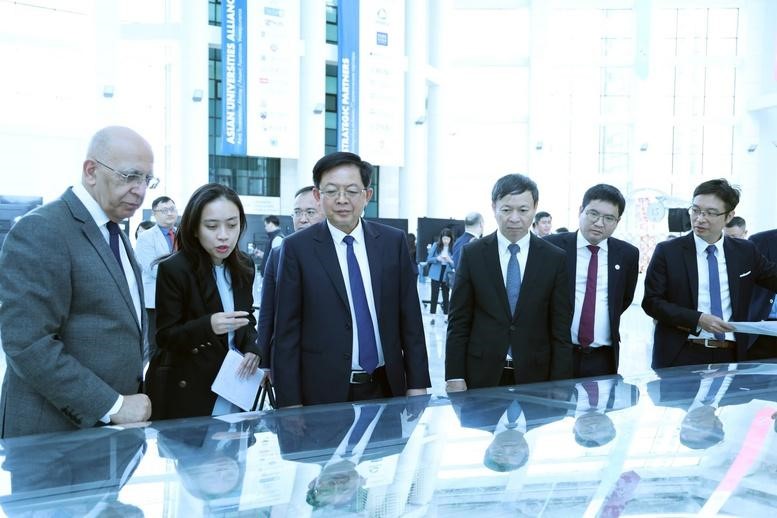
Deputy Prime Minister Ho Quoc Dung visiting and working with Nazarbayev University – Photo: VGP/Gia Huy
The delegation also included Mr. Do Ngoc Huynh, Deputy Minister-Chairman of the Government Office; Ms. Le Thi Thu Hang, Deputy Minister of Foreign Affairs; Mr. Hoang Minh, Deputy Minister of Science and Technology; Mr. Nguyen Hoang Long, Deputy Minister of Industry and Trade; along with representatives of Vietnamese agencies and organizations in Kazakhstan.
At Nazarbayev University – one of Kazakhstan’s leading higher education and research institutions – the delegation toured the university’s facilities and explored its education, research, and innovation programs in key areas such as artificial intelligence (AI), data science, energy, biotechnology, and advanced technologies. On this occasion, Deputy Prime Minister Ho Quoc Dung met and exchanged with professors, scientists, Vietnamese doctoral researchers, and students studying and conducting research at Nazarbayev University, while acknowledging the contributions of young Vietnamese intellectuals in promoting educational and scientific cooperation between the two countries.
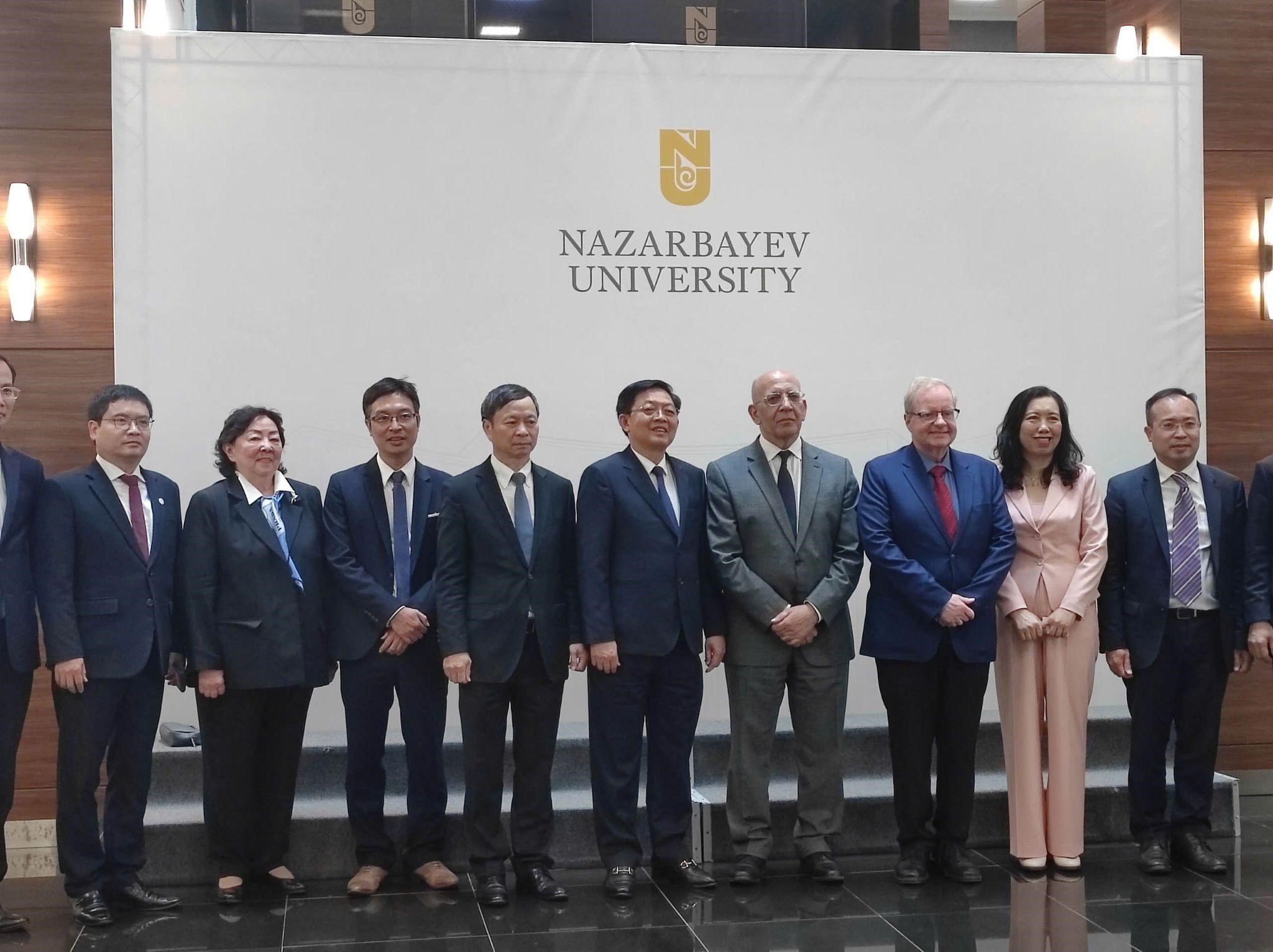
Delegates take commemorative photos at Nazarbayev University
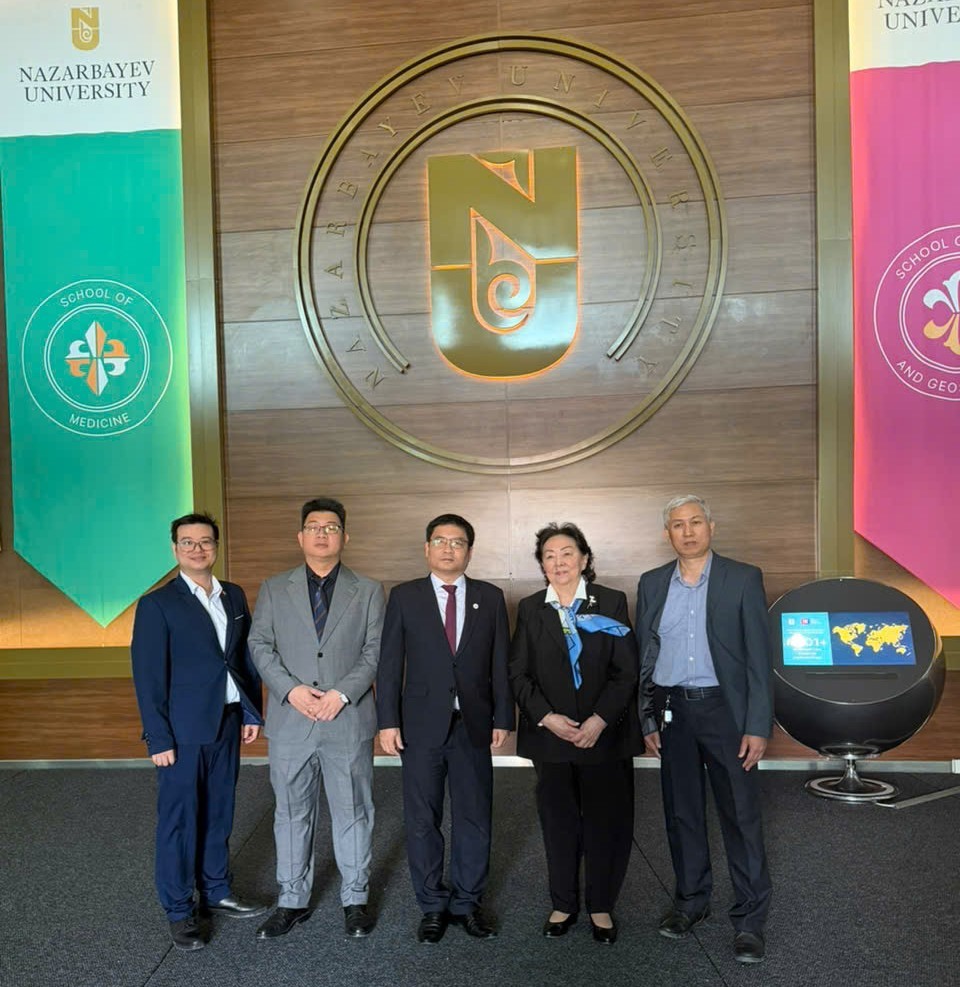
Delegates taking commemorative photos at Nazarbayev University
Speaking at the meeting, Deputy Prime Minister Ho Quoc Dung affirmed that the Communist Party and Government of Vietnam consistently identify science, technology, innovation, and digital transformation as key drivers for national development in the new era. He emphasized that Vietnamese intellectuals, scientists, and students studying abroad are valuable resources who serve as important bridges for knowledge exchange, technology transfer, international cooperation, and contributions to Vietnam’s scientific and technological development.
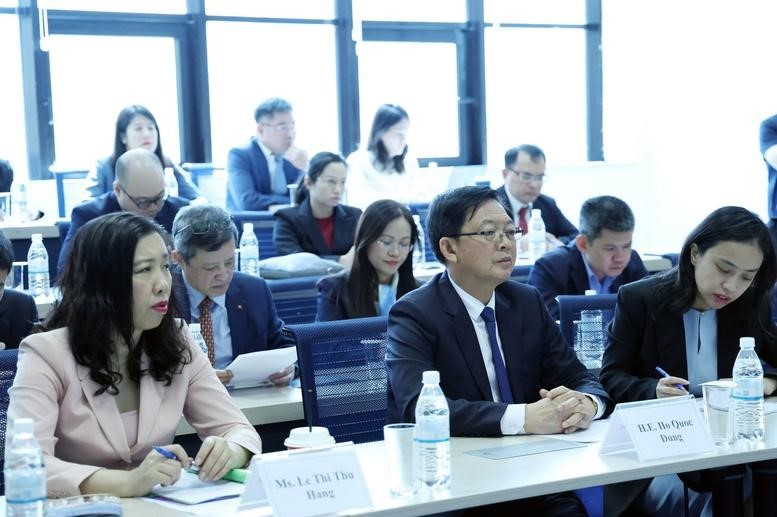
Deputy Prime Minister Ho Quoc Dung listening to presentations by professors and Vietnamese students on research programs at Nazarbayev University – Photo: VGP/Gia Huy
Continuing the working agenda, the delegation visited and worked with Astana Hub — Kazakhstan’s leading technology and innovation center. There, the delegation explored models supporting innovative startups, technology enterprise development, international investment attraction, and digital transformation, contributing to Kazakhstan’s emergence as one of Central Asia’s most dynamic innovation hubs.
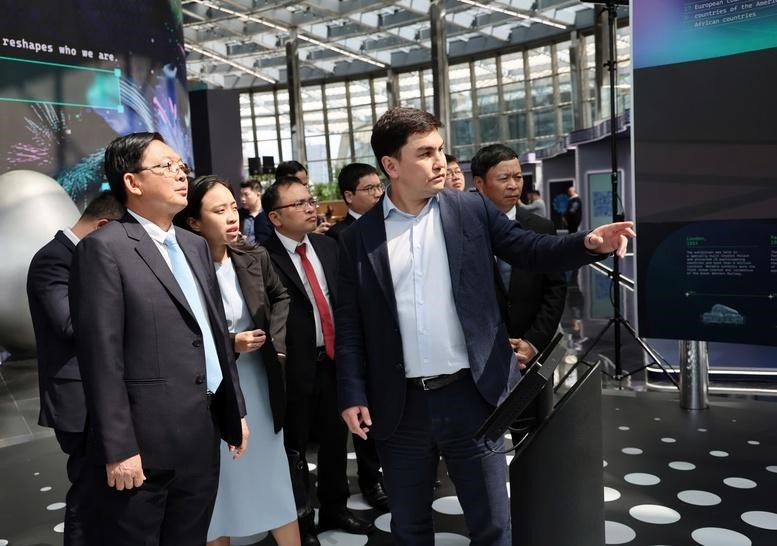
Deputy Prime Minister visiting the Astana Hub International Technology and Innovation Center – Photo: VGP/Gia Huy
Alongside the official activities, PTIT proactively connected and exchanged with universities, research centers, and innovation organizations in Kazakhstan to promote cooperation in artificial intelligence (AI), data science, innovation, and high-quality technology human resource training. These are among PTIT’s strategic priority areas and are expected to open up further opportunities for international collaboration in education, research, technology transfer, and startup ecosystem development in the coming years.
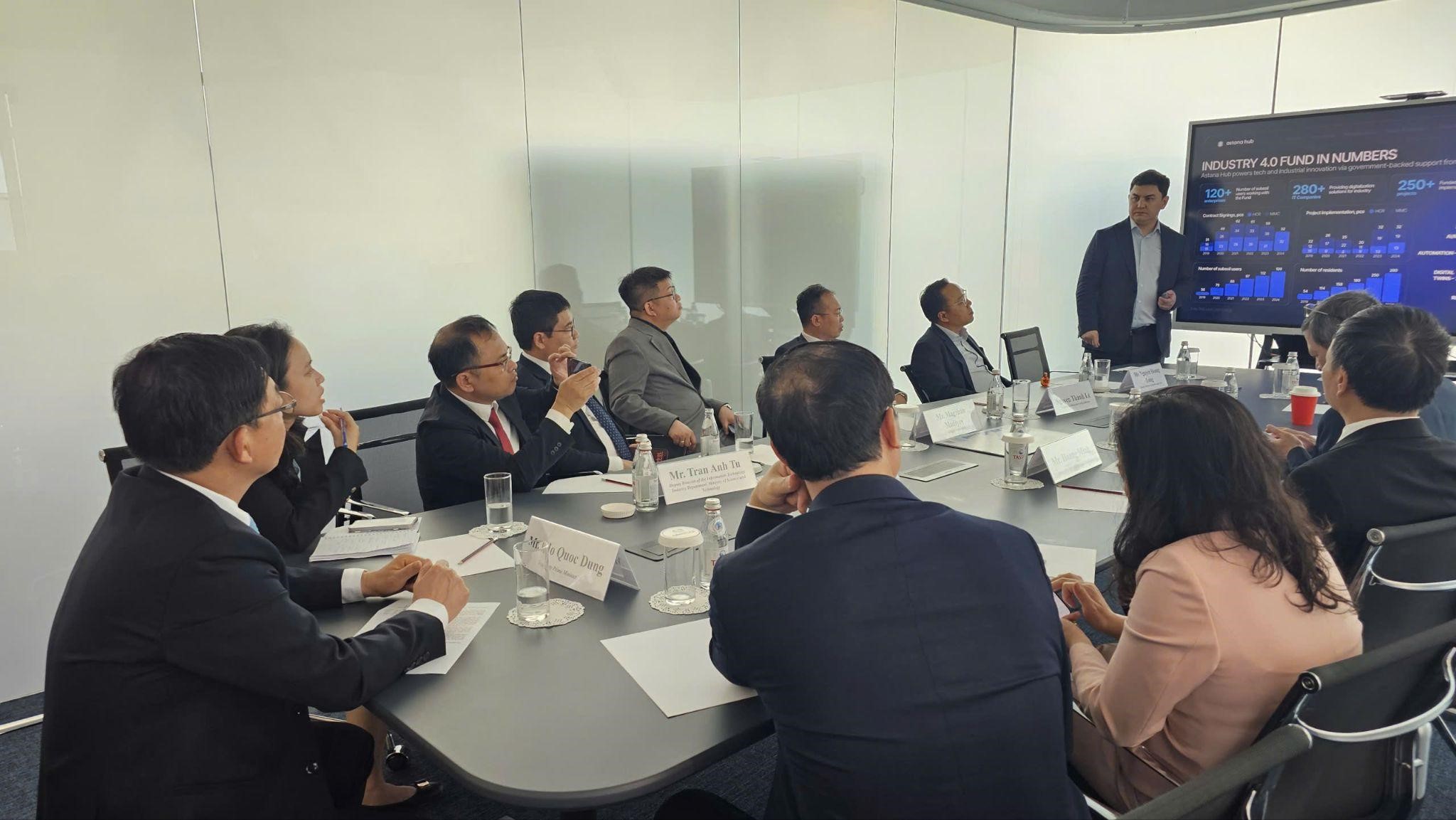
Overview of the meeting with Astana Hub International Technology and Innovation Center
Later the same day, Deputy Prime Minister Ho Quoc Dung visited and worked with staff members of the Embassy of Vietnam in Kazakhstan. During the meeting, the Deputy Prime Minister acknowledged the embassy’s efforts in diplomacy, citizen protection, and promoting bilateral cooperation between Vietnam and Kazakhstan. He also emphasized the important role of diplomatic missions in strengthening people-to-people exchanges, promoting the image of Vietnam and its culture, connecting overseas Vietnamese communities, and supporting organizations and businesses of both countries in expanding cooperation in the new development phase.
As part of the program at the Embassy, representatives of PTIT introduced and presented the Vietnamese language learning application VieAI to the Embassy of Vietnam in Kazakhstan. VieAI is an AI-powered solution researched and developed by PTIT experts to support Vietnamese language learning through intelligent interaction methods, personalized learning content, and enhanced user experiences. The introduction of VieAI not only contributes to promoting Vietnamese language and culture internationally but also demonstrates PTIT’s capabilities in researching and developing digital technology products.
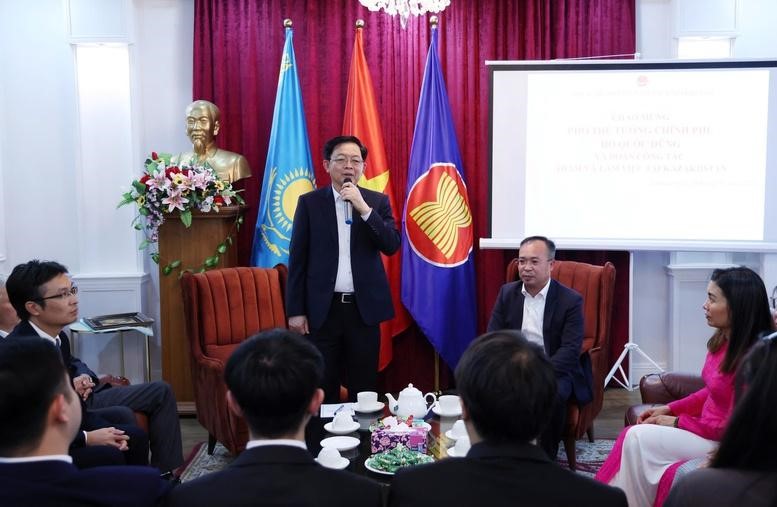
Deputy Prime Minister Ho Quoc Dung speaking during his visit and meeting with staff members of the Embassy of Vietnam in Kazakhstan – Photo: VGP/Gia Huy
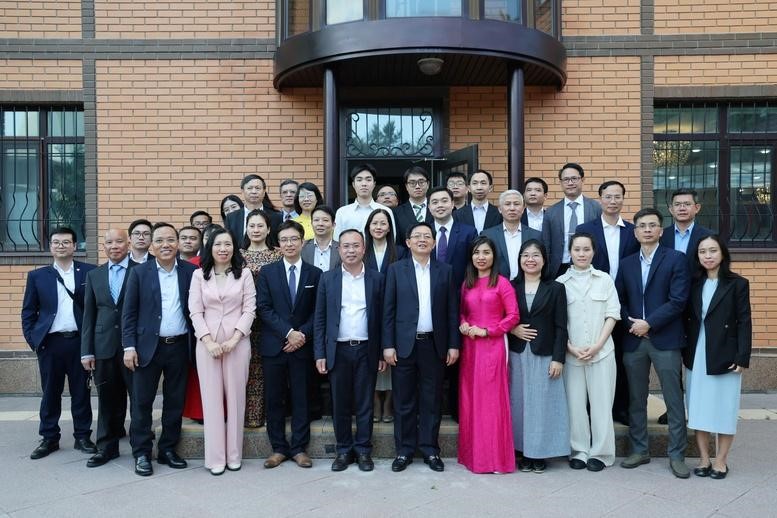
Deputy Prime Minister Ho Quoc Dung takeing commemorative photos with staff members of the Embassy of Vietnam in Kazakhstan – Photo: VGP/Gia Huy
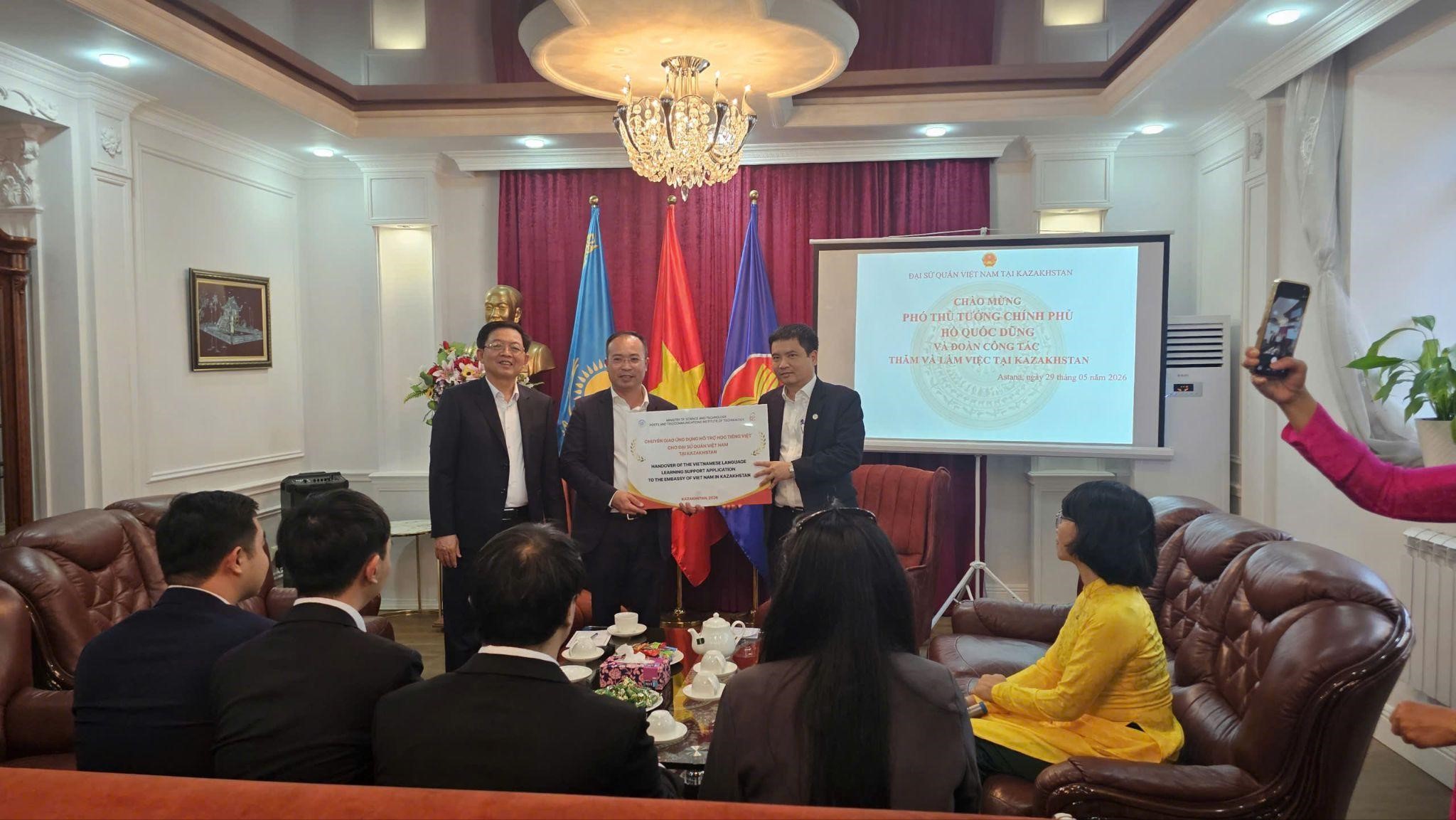
Assoc. Prof. Dang Hoai Bac, President of PTIT, presenting the VieAI Vietnamese language learning application to the Embassy of Vietnam in Kazakhstan
PTIT’s participation in the high-level Government delegation to Kazakhstan further affirms the institute’s role and position within international networks for science, technology, innovation, and digital transformation cooperation. The visit also opens up numerous opportunities for collaboration with universities, research institutes, innovation centers, and technology enterprises in Kazakhstan, contributing to the advancement of education, research, technology transfer, and high-quality human resource development in the years ahead.