From April 13 to 15, 2026, a delegation from the Posts and Telecommunications Institute of Technology (PTIT) conducted a working visit to Tsinghua University – one of the leading universities in China and globally. The visit not only served as an academic exchange activity but also concretized PTIT’s strategic objectives in mastering microelectronics, artificial intelligence (AI), and developing an internationally standardized innovation and startup ecosystem.
Advancing AI and Digital Twin Research in Microchip Design
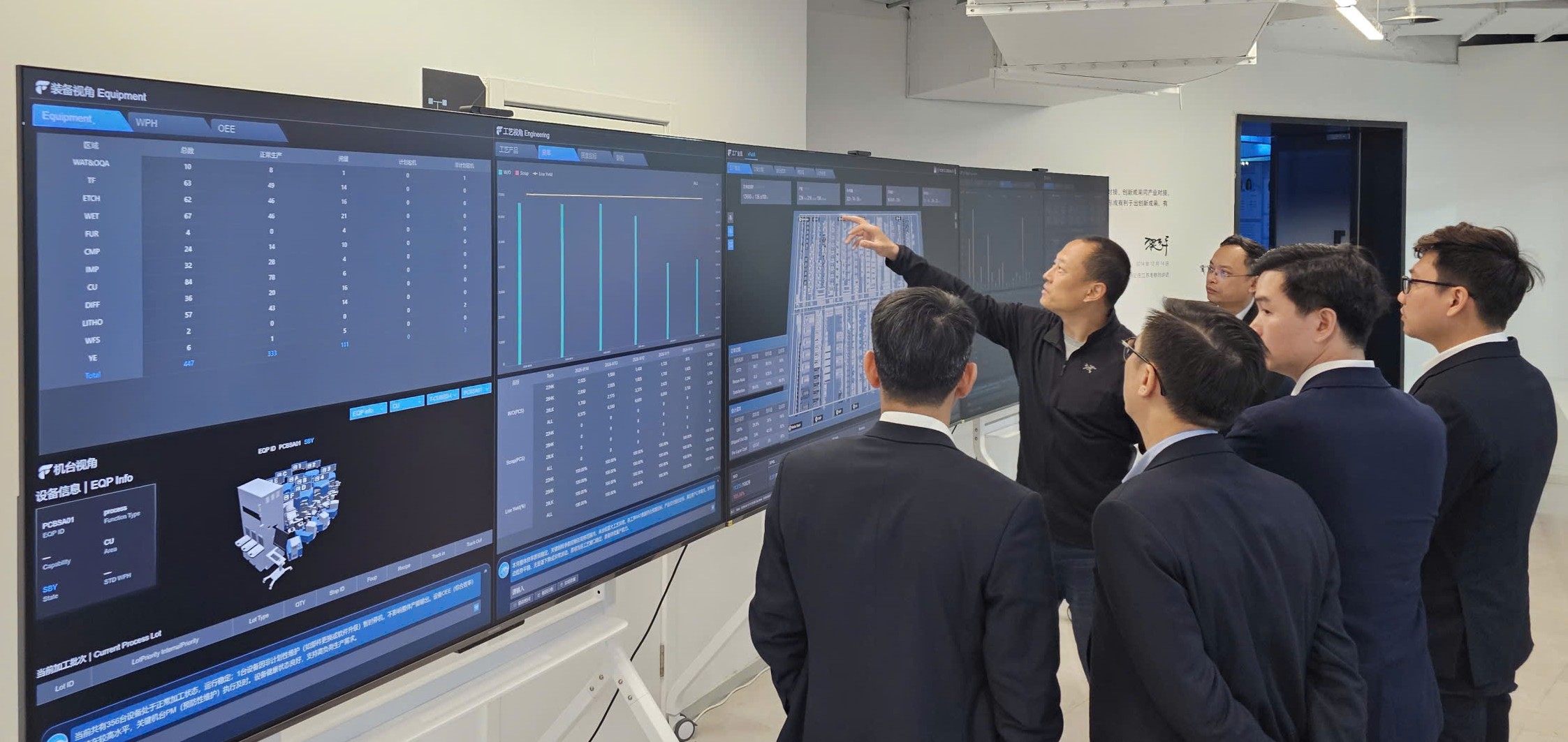
On April 13, 2026, the PTIT delegation held a working session with the School of Integrated Circuits (SIC) at Tsinghua University, focusing on the application of AI and Digital Twin technologies in microchip design.
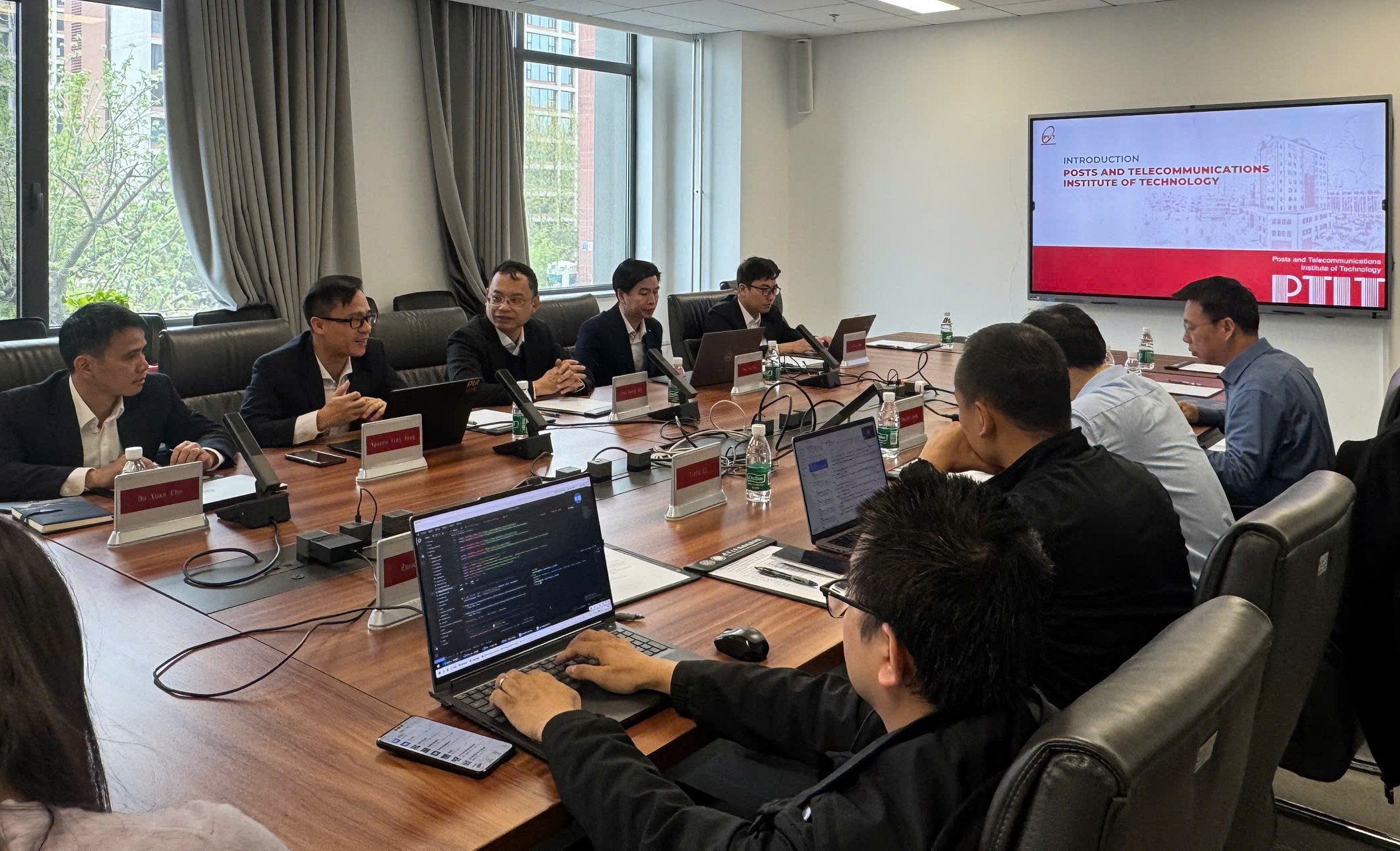
Overview of the working session
During the session, SIC representatives introduced their training and research model, along with a collaborative ecosystem closely connected with leading semiconductor corporations such as Samsung and SK Hynix. SIC experts also shared practical insights into the application of AI to shorten design cycles and enhance product development efficiency in the semiconductor field.
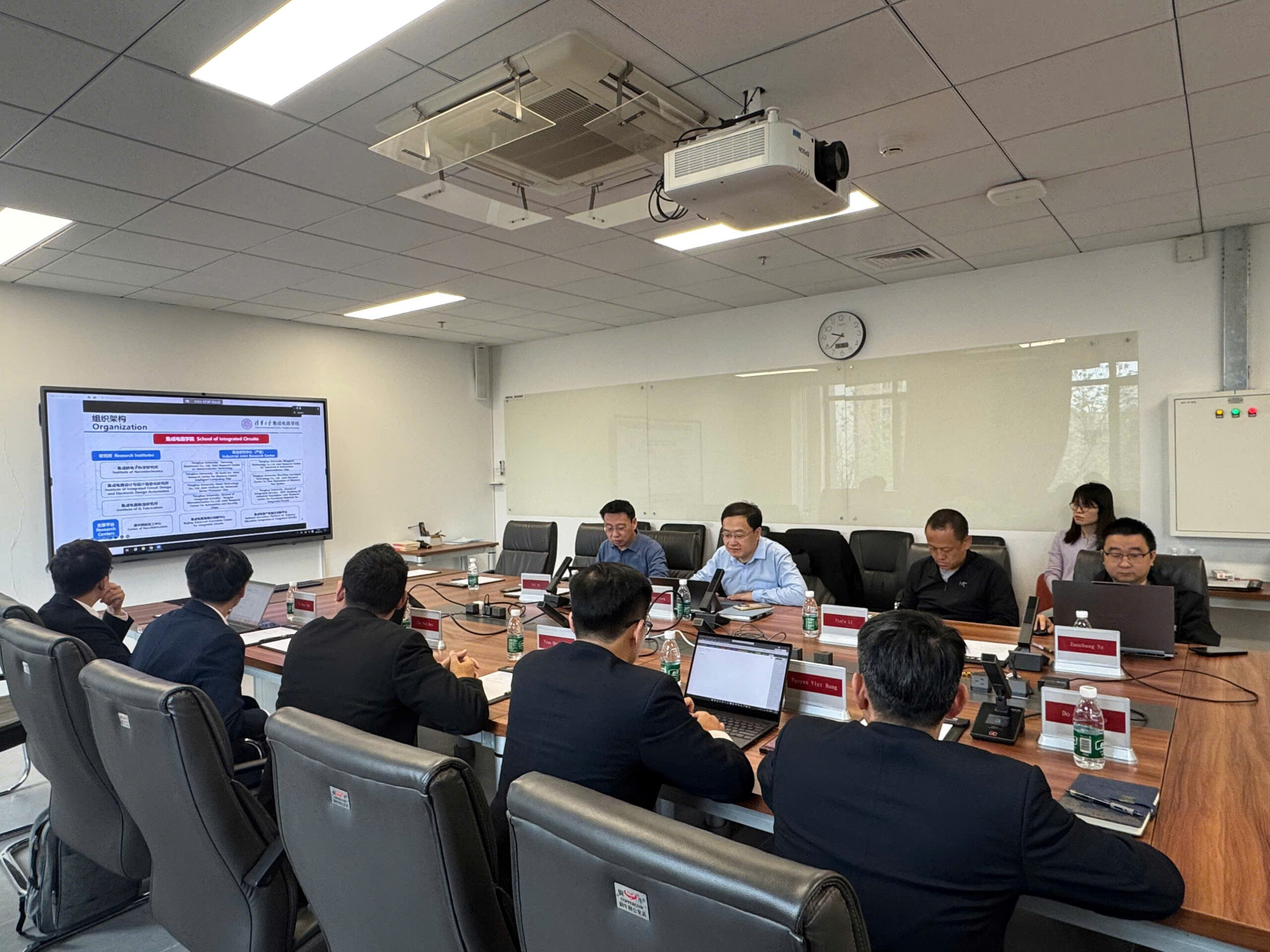
In his remarks, Assoc. Prof. Dr. Tran Quang Anh, Vice President of PTIT, proposed several specific directions for cooperation, including AI applications in RF chip design, leveraging open-source platforms for training, promoting PhD student exchange, and exploring funding opportunities from enterprises and government agencies. Both sides also discussed the possibility of joining a semiconductor university alliance in Asia initiated by Tsinghua University.
Expanding Innovation Ecosystem and Strengthening Industry Linkages
As part of the working program, the PTIT delegation also met with TusPark, the science park affiliated with Tsinghua University and a leading model for university-based innovation ecosystems.
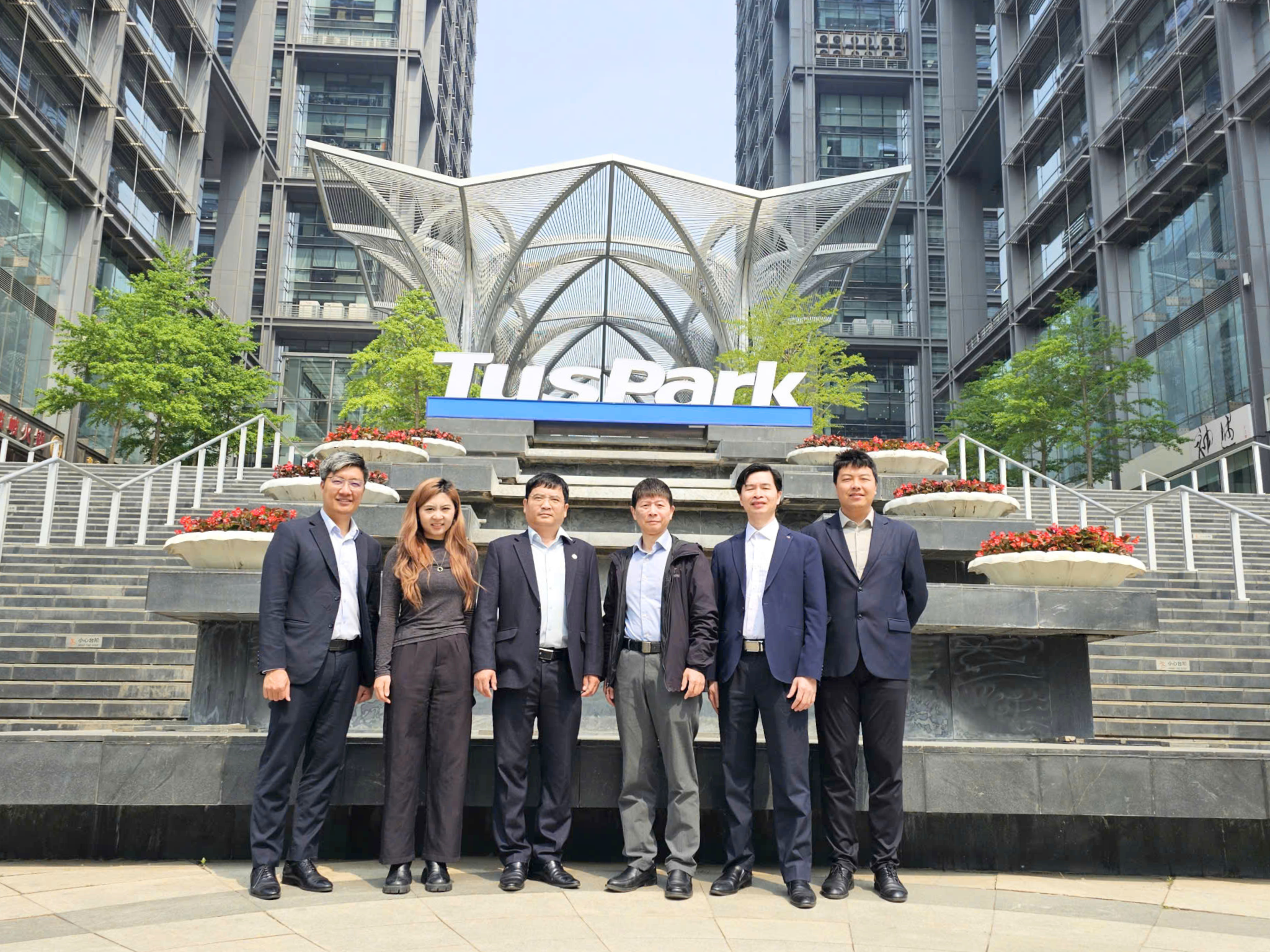
Assoc. Prof. Dr. Dang Hoai Bac, President of PTIT, and the delegation during the working session at TusPark
During the session, both sides focused on the “University–Industry–Government” (Triple Helix) model, emphasizing its role in bridging academic research with market demands. Representatives from TusPark shared detailed experience in building and operating a science park, including startup selection and incubation processes, mechanisms for mobilizing financial resources, and strategies to support enterprises in expanding into international markets.
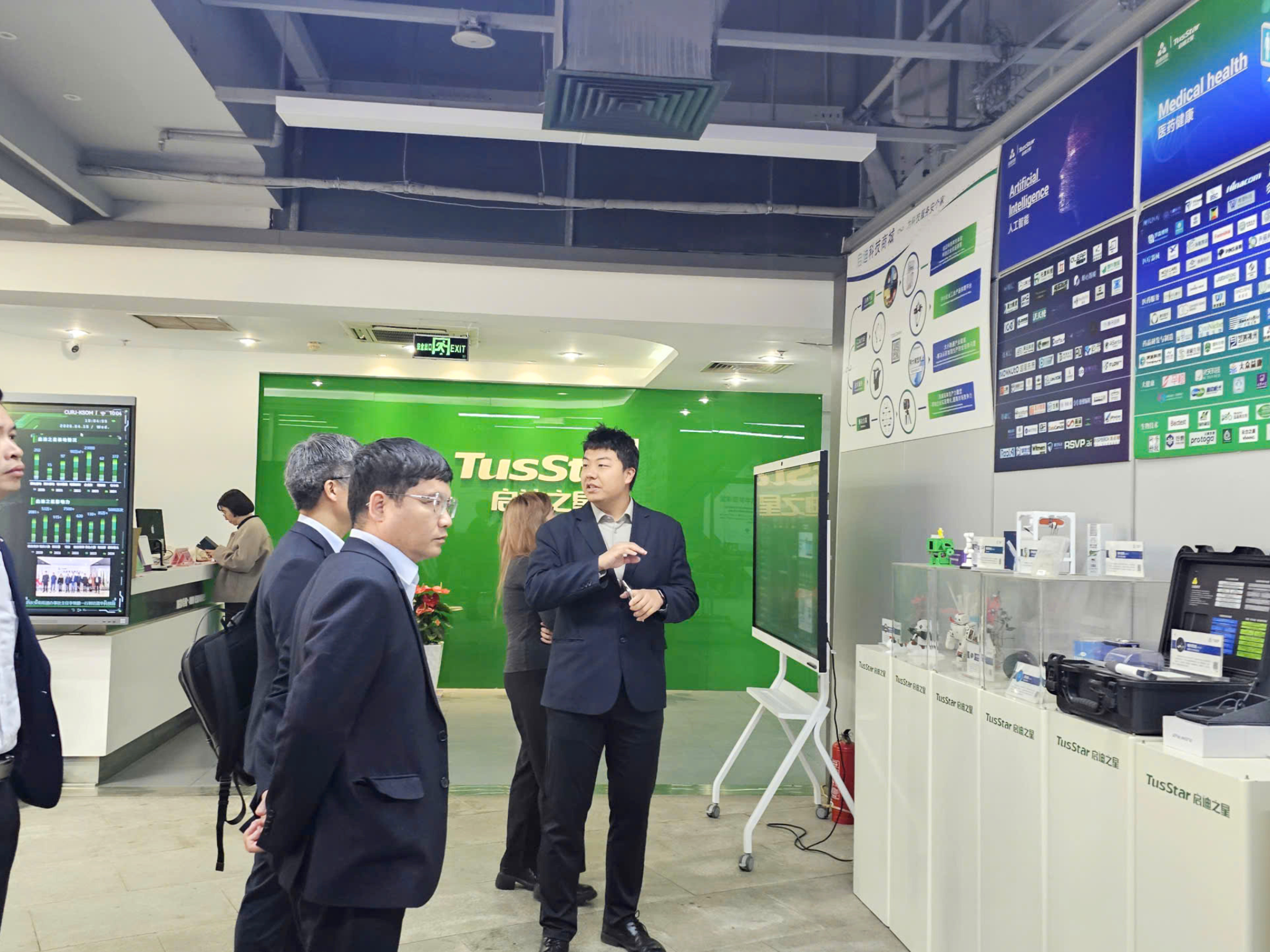
The PTIT delegation during the working session with TusPark
With more than 1,500 companies and tens of thousands of startup projects in operation, TusPark is recognized as one of the largest innovation ecosystems, playing a critical role in connecting research with technology commercialization.
From PTIT’s side, the delegation expressed strong interest in applying these models to develop its own innovation ecosystem, particularly in linking research activities with industry needs. Both sides also discussed initial plans for collaboration in incubation programs, entrepreneurship training, and enterprise engagement, with the aim of creating tangible outputs from research activities of students and faculty members.
Enhancing Cooperation in Training and Research in Cybersecurity and AI
On April 15, 2026, the PTIT delegation continued its working sessions with the Institute for Network Sciences and Cyberspace (INSC) at Tsinghua University, focusing on cooperation in digital technology training and research.
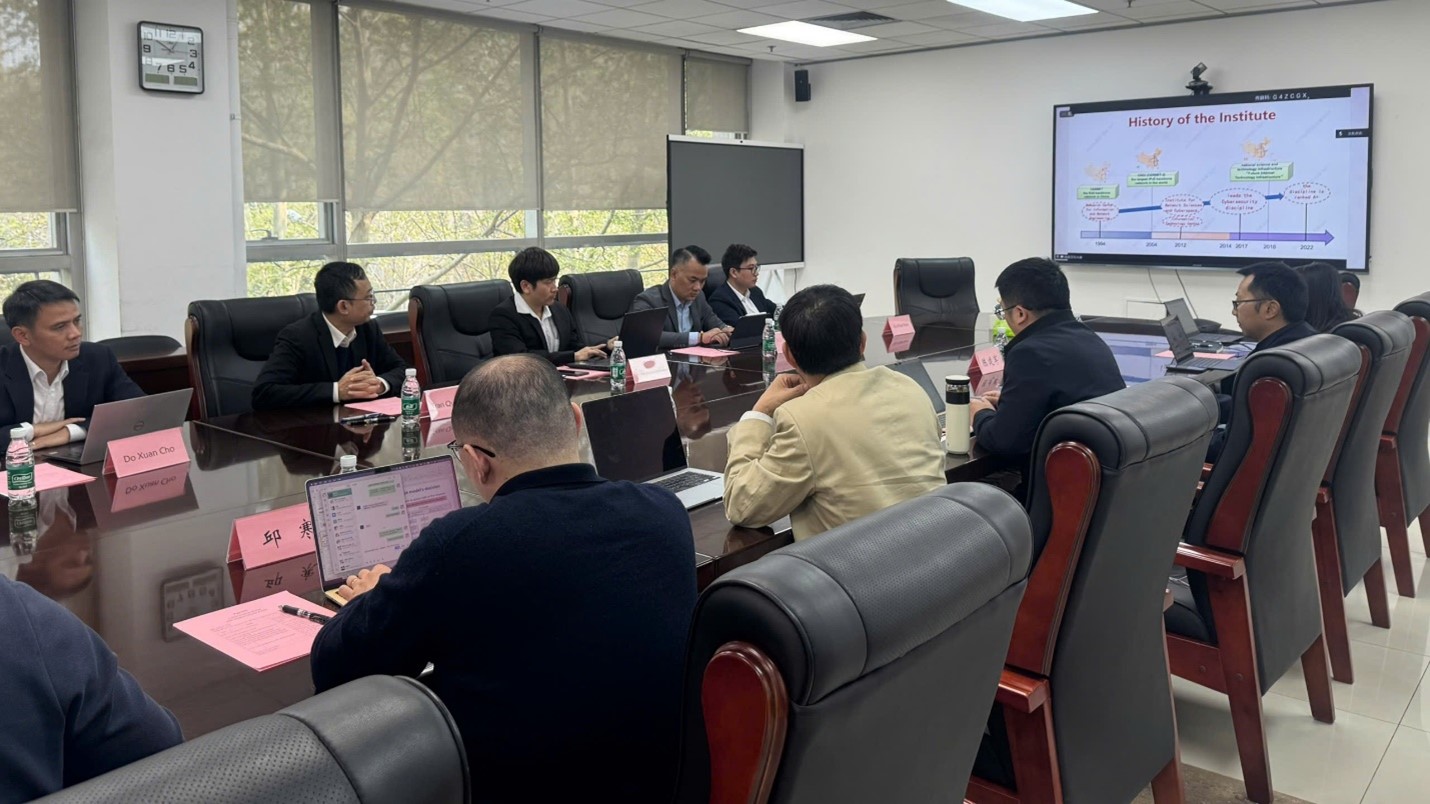
The PTIT delegation working with the Institute for Network Sciences and Cyberspace (INSC), Tsinghua University
During the meeting, INSC representatives introduced their strategic research directions, particularly the application of AI in source code analysis, threat detection in cybersecurity, ensuring the safety of large language models (LLMs), and identifying vulnerabilities in protocol systems.
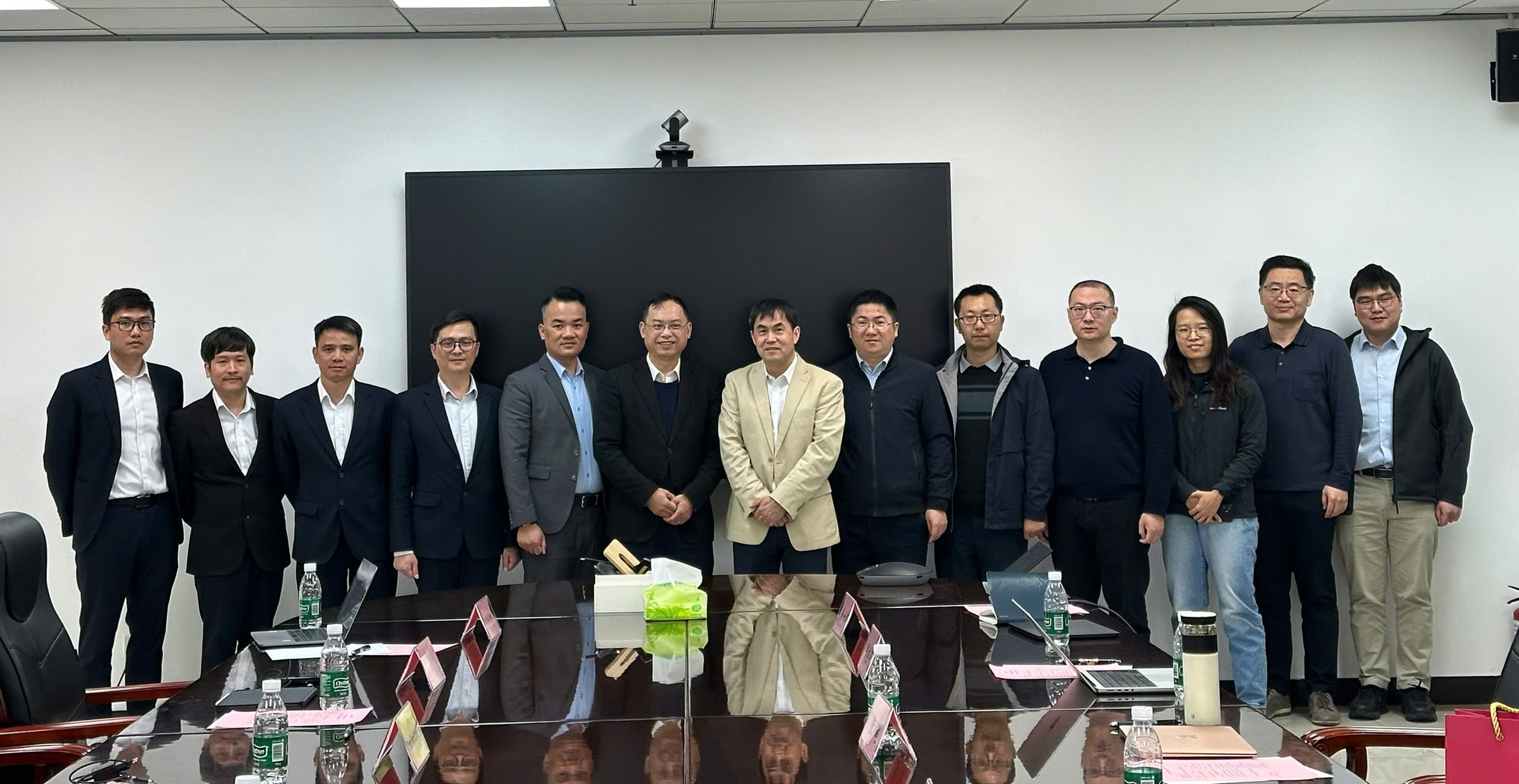
Assoc. Prof. Dr. Tran Quang Anh and the PTIT delegation take a commemorative photo with the Institute for Network Sciences and Cyberspace (INSC), Tsinghua University
Both sides agreed to strengthen cooperation through joint supervision of PhD students, graduate student exchange programs, organization of academic seminars, and the involvement of international experts in teaching activities. INSC also expressed its interest in expanding student exchange programs and inviting PTIT students to participate in international cybersecurity competitions.
Advancing Capacity in Training and Research in the Digital Era
The series of working sessions with various units of Tsinghua University contributed to strengthening the partnership between PTIT and its international counterparts, while opening up concrete opportunities for collaboration in key technological fields. Through these activities, PTIT continues to reaffirm its development orientation toward innovation, enhancing the quality of training and research, and gradually building a comprehensive technology and entrepreneurship ecosystem.