Two specialized training centers for AI and semiconductor microchips have been established to focus on advanced training, retraining, and upskilling for students, engineers, and the workforce currently operating in spearhead technology sectors.
Activities to Materialize Resolution 57
On December 19, at the Hanoi training campus, the Posts and Telecommunications Institute of Technology (PTIT) announced the decisions to establish and launch the Advanced Artificial Intelligence (AI) Training Center and the Advanced Semiconductor Microchip Training Center.
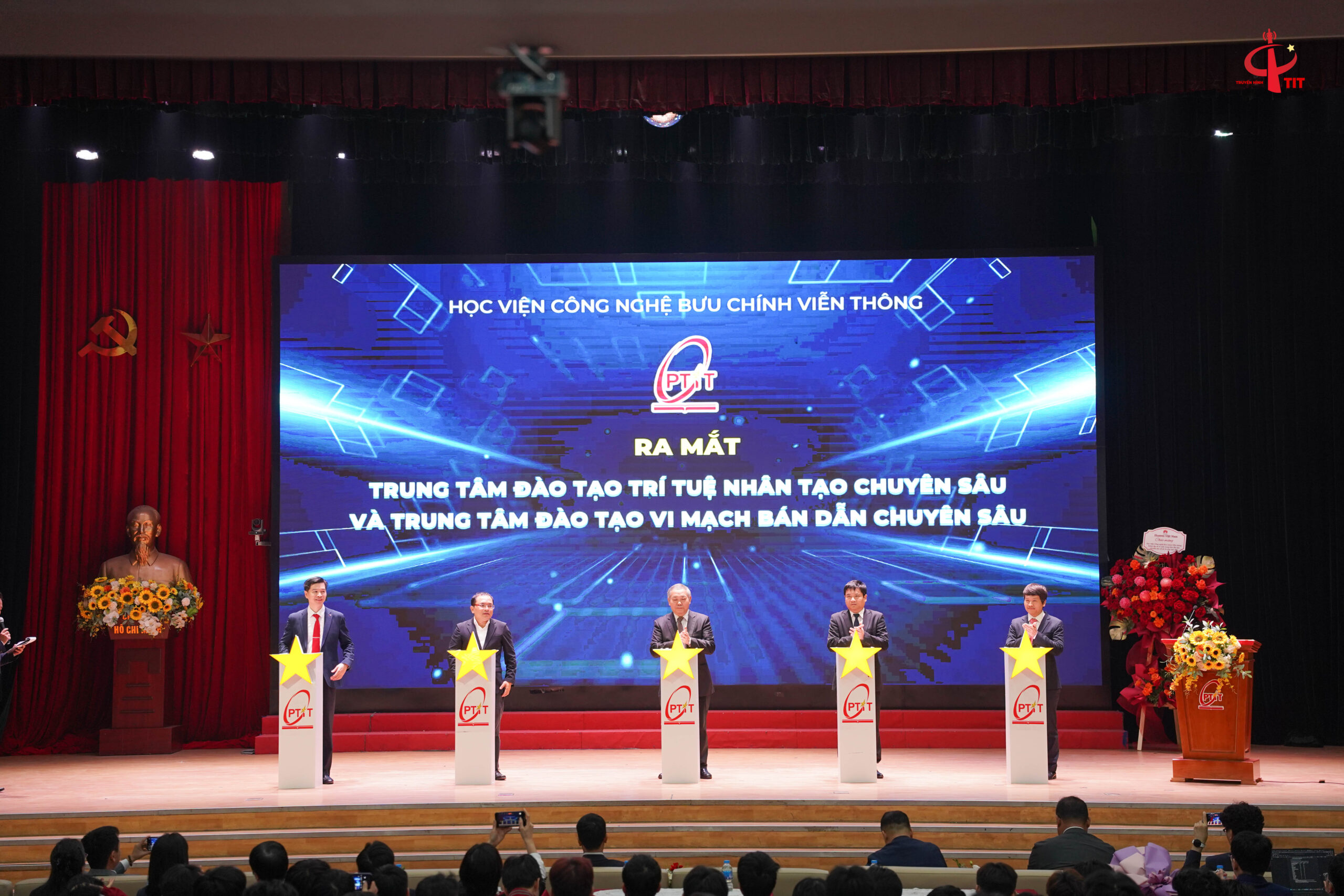
Delegates perform the inauguration ceremony for the Advanced AI Training Center and the Advanced Semiconductor Microchip Training Center.
Taking place on the occasion of the 79th anniversary of National Resistance Day, the event carries profound political, scientific, and educational significance; it also demonstrates PTIT’s determination to contribute to the development of science, technology, and high-quality human resources for the country.
The launch of these two specialized training centers is a strategic step by PTIT to implement Resolution 57 of the Politburo on breakthroughs in science, technology, innovation, and national digital transformation. Resolution 57 clearly identifies the requirement to build the capacity to master strategic technologies, in which AI and semiconductor microchip technology play fundamental roles, while emphasizing the responsibility of key higher education institutions in training high-quality human resources and forming specialized training and research centers.
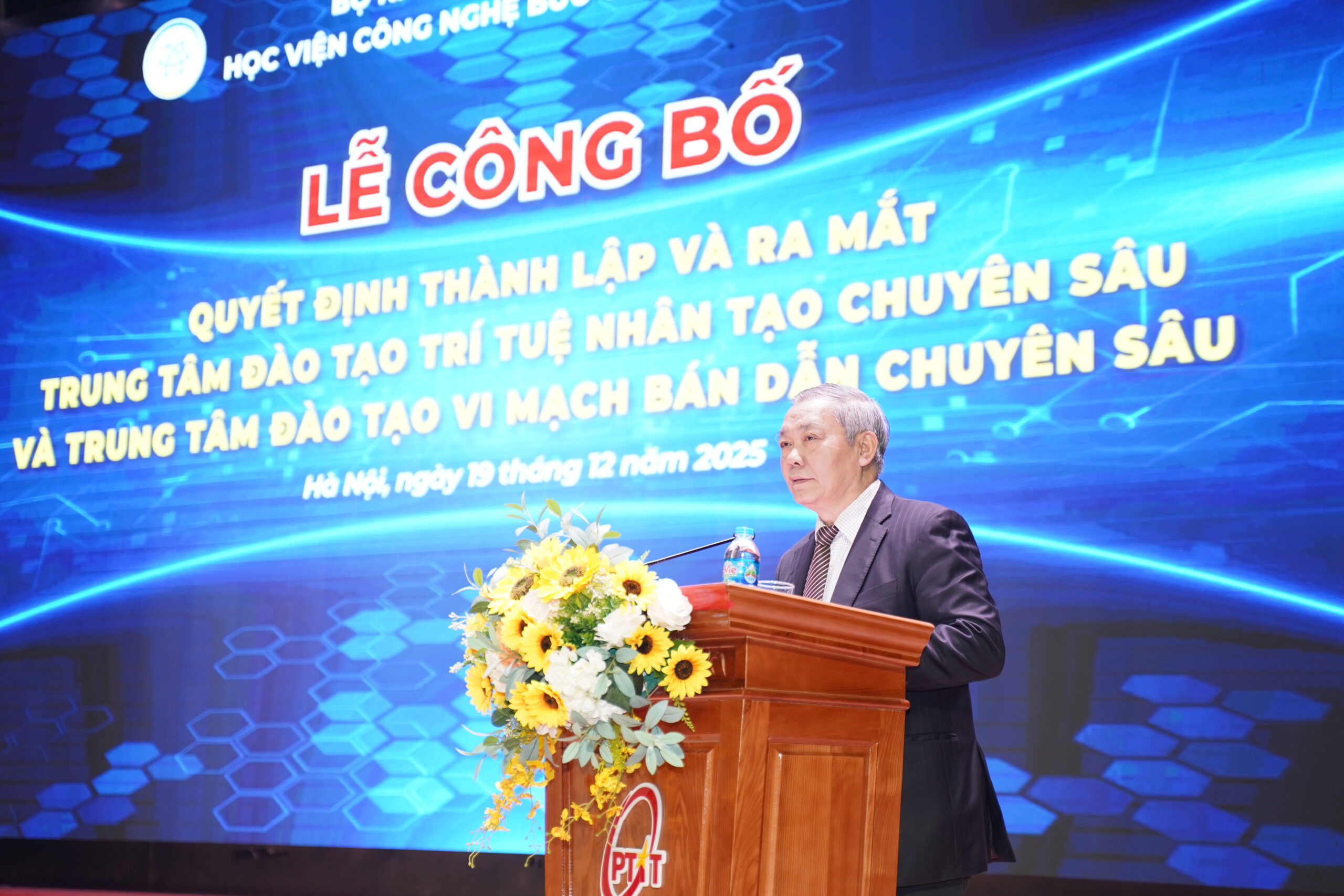
Dr. Tran Duc Lai, Chairman of the Radio & Electronics Association of Vietnam, stated: The establishment and operation of the two specialized training centers for AI and semiconductors will contribute to the country’s long-term development.
Speaking at the launch event, Dr. Tran Duc Lai, former Deputy Minister of Information and Communications and Chairman of the Radio & Electronics Association of Vietnam, emphasized that AI and semiconductor microchips are two vital strategic fields. He noted that the Institute’s establishment and operation of specialized centers in these two important areas will contribute to the long-term development of the country.
“With the decisions announced today and the support of many domestic and international enterprises, the Posts and Telecommunications Institute of Technology, especially the two specialized training centers for AI and semiconductors, will fulfill their assigned missions and tasks, making practical contributions to the research, education, and training of high-quality human resources,” Dr. Tran Duc Lai expressed confidently.
According to Associate Professor Dr. Dang Hoai Bac, President of PTIT, in the context of global strategic technological competition, mastering AI and semiconductor microchips is not only an economic development requirement but also linked to ensuring economic security, digital sovereignty, and national technological autonomy. By establishing the two specialized centers on December 19, the Institute aims to inherit the spirit of self-reliance from National Resistance Day in a new era—resistance on the science and technology front.
AI and Semiconductor Training Linked to Industrial Projects and Problems
The Institute’s leadership also stated that PTIT’s orientation for these specialized centers is to focus on advanced training, retraining, and upskilling for students, engineers, and the workforce in spearhead technology sectors. The two centers aim to implement training programs linked to the practical needs of businesses, enhancing learning through projects, laboratories, and industrial problems, while promoting applied research, technology transfer, and international cooperation.
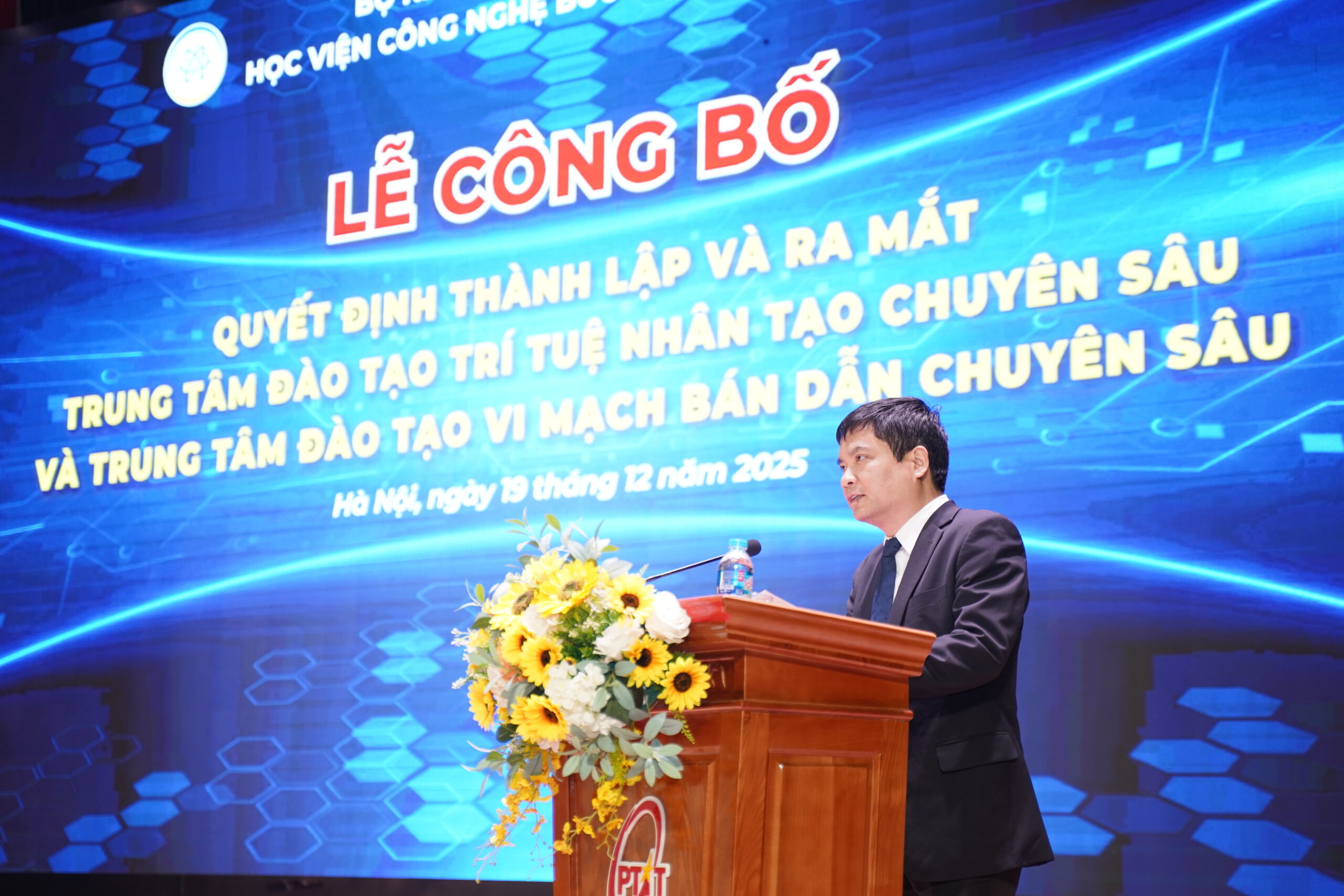
Associate Professor Dr. Dang Hoai Bac, President of PTIT, speaks at the launch event for the two specialized training centers for AI and semiconductors.
The Institute’s leadership also reaffirmed their commitment to focused and key investment in the Advanced AI Training Center and the Advanced Semiconductor Microchip Training Center regarding faculty, experts, technical infrastructure, and training programs based on corporate and international standards. The school will also strengthen cooperation with major domestic and foreign technology enterprises, research institutes, and partner universities, step-by-step forming a training-research-innovation ecosystem in the field of AI and semiconductors.
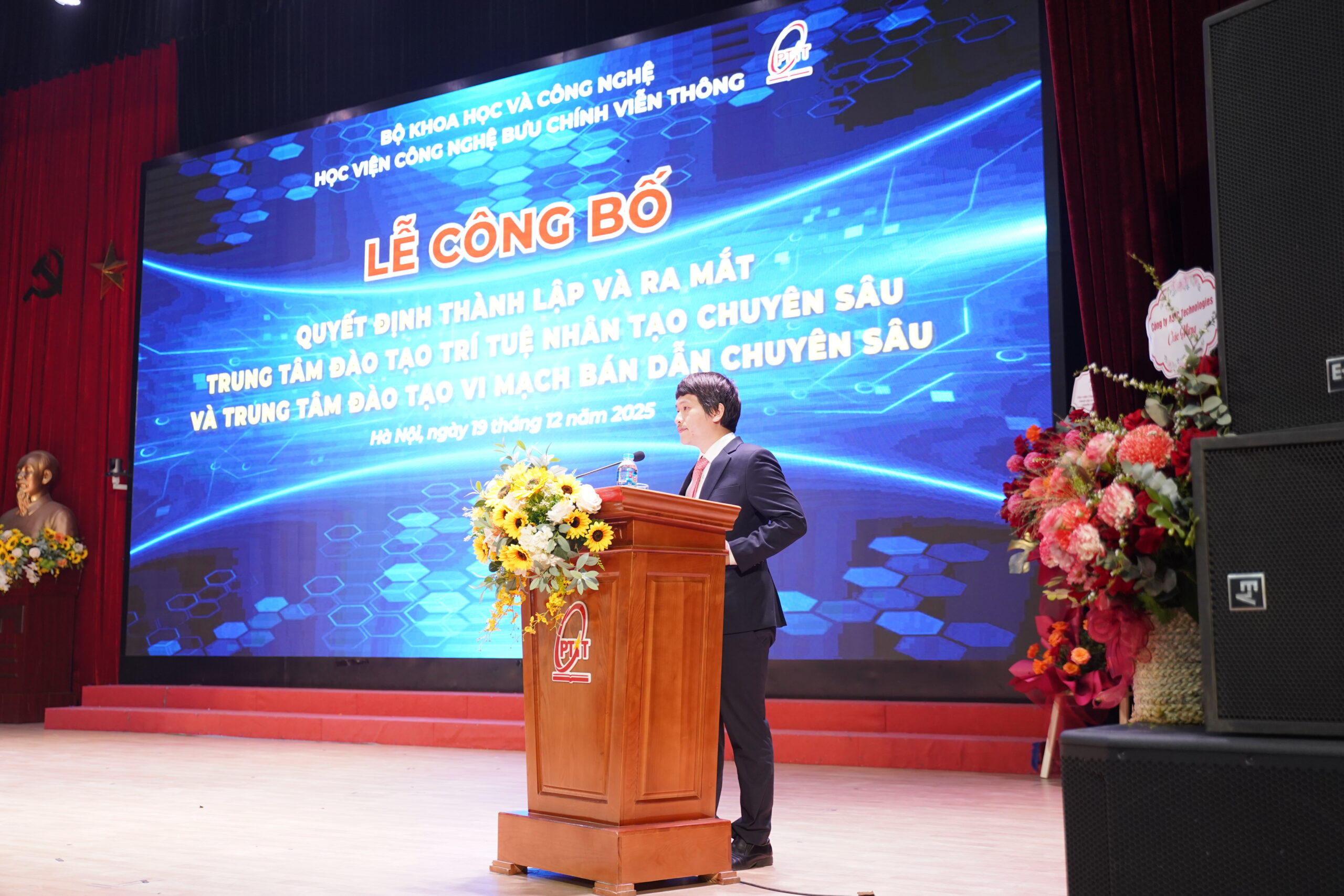
Dr. Tran Tien Cong, Head of the AI Department and Head of the Advanced AI Training Center, speaks.
Upon accepting his duties, Dr. Tran Tien Cong stated that the center will be a serious, creative, and inspiring learning and research space where students are equipped with in-depth knowledge, practice their skills, and gradually master modern AI technologies, thereby contributing their intelligence and youth to the development of the Institute and the country.
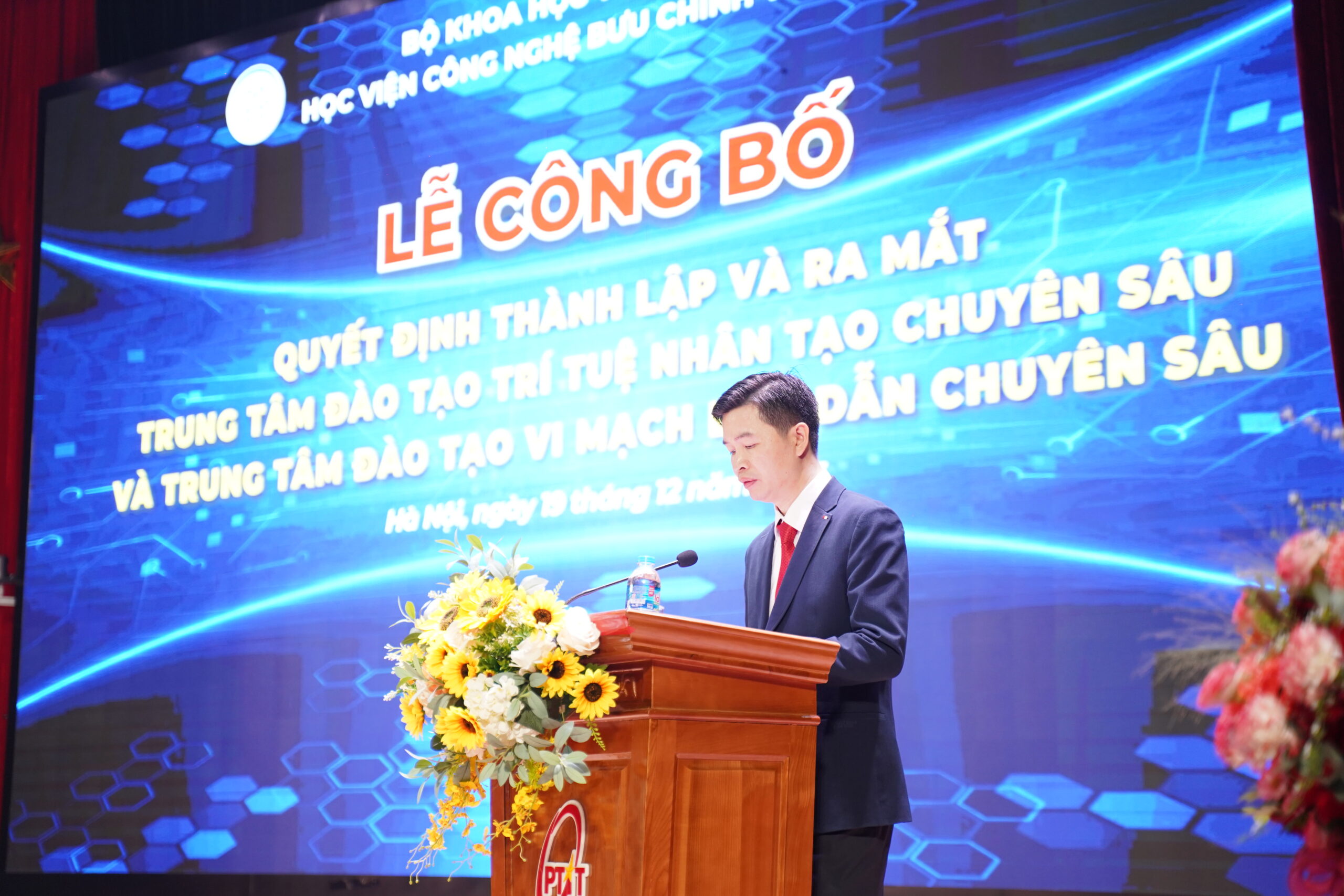
Dr. Chu Van Ben, lecturer at the Faculty of Electronic Engineering 1 and Head of the Advanced Semiconductor Microchip Training Center, speaks.
Emphasizing that semiconductor microchips are the “heart” of the 4.0 revolution and that high-quality human resource training must go hand in hand with research, application, multidisciplinary cooperation, and corporate connection, Dr. Chu Van Ben committed to building the center into a “center of excellence” with an updated curriculum, modern labs, and a team of experienced instructors with real-world expertise.
“In parallel, we are committed to promoting cooperation with leading domestic and international universities, along with a network of businesses, so that students can access real projects from the moment they start studying; coordinating with the Committee for Overseas Vietnamese to attract experts from the diaspora, creating a global knowledge bridge,” Dr. Chu Van Ben shared.